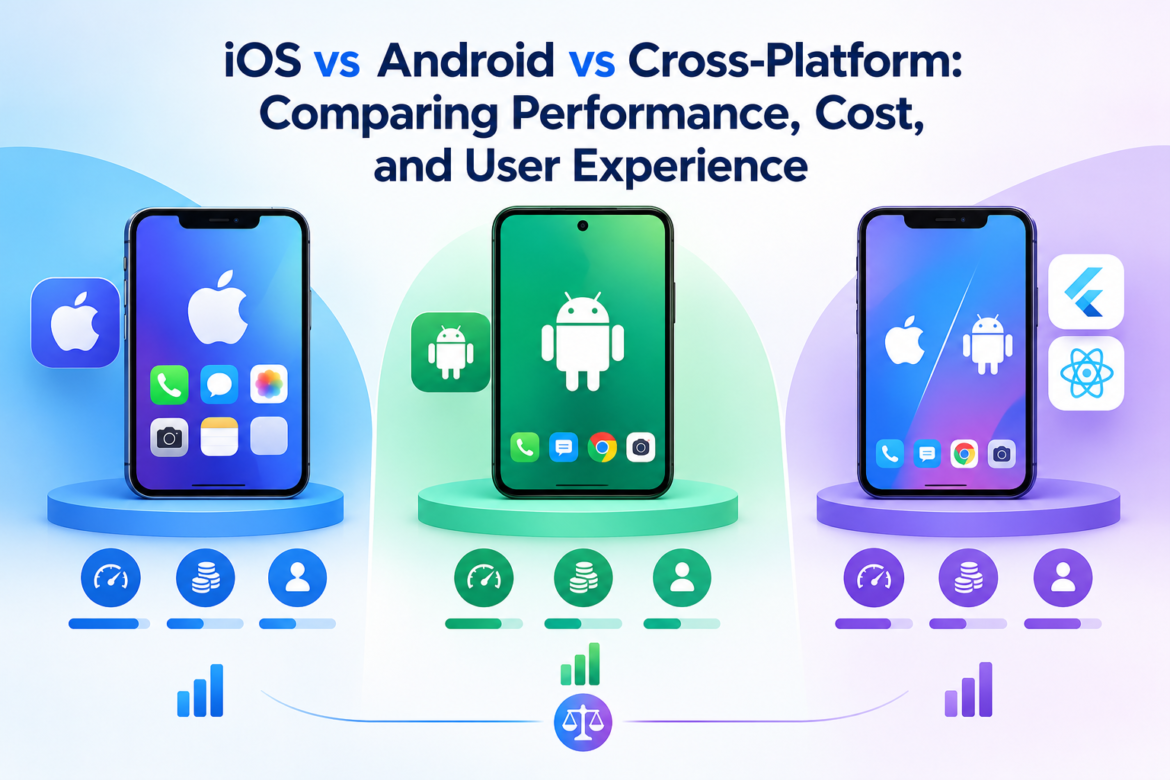
Mobile applications have become a powerful tool for businesses looking to reach customers, improve engagement, and expand their digital presence. However, choosing the right app development approach can significantly influence a project’s success. Businesses often compare iOS, Android, and cross-platform development to determine which option delivers the best balance of performance, affordability, and user experience.
Understanding the differences between these approaches helps businesses make informed decisions based on their goals, budgets, and target audiences. In this article, App Scoop explores iOS vs Android vs cross-platform development, focusing on three important factors: performance, cost, and user experience.
Understanding iOS, Android, and Cross-Platform Development
Before comparing their performance and costs, it is important to understand how these development approaches work and where each one fits.
What is iOS App Development?
iOS app development involves building applications for Apple’s mobile operating system, primarily used on iPhones. Developers generally use Swift or Objective-C, along with Apple’s development tools, to create applications optimized for the Apple ecosystem.
Native iOS development offers access to platform-specific features, consistent design guidelines, and direct integration with Apple services. It can be a suitable option for businesses targeting iPhone users or developing applications that require specialized iOS functionality.
What is Android App Development?
Android app development focuses on creating applications for devices powered by Google’s Android operating system. Kotlin and Java are widely used programming languages, while Android Studio provides a comprehensive development environment.
Android supports devices from numerous manufacturers, allowing businesses to reach a broad audience across different markets and price ranges. However, developers must consider differences in hardware, screen sizes, and operating system versions when designing and testing applications.
What is Cross-Platform App Development?
Cross-platform development enables businesses to build applications for multiple operating systems using a shared codebase. Frameworks such as Flutter and React Native help developers reuse application logic and, in many cases, interface components across iOS and Android.
This approach can reduce duplicated work and simplify development. It is particularly attractive to startups and businesses that want to launch on multiple platforms without maintaining two entirely separate codebases.
Comparing App Performance Across Platforms
Performance directly affects how quickly an application responds, how smoothly it operates, and how effectively it handles demanding tasks.
iOS and Android Performance
Native iOS and Android applications can deliver excellent performance because developers can use platform-specific APIs and tools. They can optimize application behavior for the operating system, hardware capabilities, and device features.
Native development is particularly valuable for applications involving advanced graphics, intensive processing, augmented reality, or complex device integrations. However, actual performance depends on code quality, architecture, backend services, and optimization rather than the operating system alone.
Cross-Platform Performance
Modern cross-platform frameworks provide strong performance for many common application types, including e-commerce platforms, booking systems, business tools, and content applications.
Nevertheless, applications with specialized hardware requirements or demanding animations may need additional optimization or native modules. Businesses should evaluate the framework against their actual technical requirements instead of assuming that cross-platform applications are always slower.
Key takeaway: Native development offers greater direct control over platform-specific optimization, while cross-platform development provides sufficient performance for many business applications.
Comparing App Development Costs
Development costs depend on the application’s complexity, feature requirements, team expertise, testing needs, and long-term maintenance plans.
Cost of Native iOS and Android Development
Building separate native applications for iOS and Android often requires additional development resources. Although teams can share backend services, business logic, and design concepts, platform-specific implementation and testing may still be necessary.
This can increase the initial investment, particularly for businesses planning to launch on both operating systems simultaneously.
However, native development may be a worthwhile investment when an application requires advanced functionality, specialized integrations, or extensive platform-specific optimization.
Cost of Cross-Platform Development
Cross-platform development can lower costs by allowing developers to reuse a substantial portion of the codebase. Teams may spend less time implementing the same features separately and coordinating updates across different platforms.
It can also simplify maintenance when most functionality is shared. However, costs may increase if the application requires numerous native integrations, extensive platform-specific customization, or complex debugging.
Key takeaway: Cross-platform development can be more economical for applications targeting both operating systems, while native development may offer better value for projects with specialized requirements.
Comparing User Experience and Interface Design
A successful mobile application should be intuitive, responsive, accessible, and consistent with users’ expectations.
User Experience in Native Applications
Native applications can closely follow the design conventions of their respective operating systems. This helps developers create familiar navigation patterns, interactions, and interface elements.
For example, iOS and Android differ in certain navigation behaviors and interface conventions. Native development gives teams direct control over these differences, which can improve usability for platform-specific audiences.
User Experience in Cross-Platform Applications
Cross-platform frameworks allow developers to maintain consistent branding and functionality across multiple operating systems. This can help businesses deliver a unified experience while reducing duplicated development work.
However, consistency should not come at the expense of usability. Developers may need to adapt navigation, buttons, gestures, and other interface elements to match user expectations on each platform.
Key takeaway: Native development provides direct control over platform-specific experiences, while cross-platform development can deliver a consistent, high-quality interface when designed carefully.
iOS vs Android vs Cross-Platform: Which Is Best for Your Business?
The best development approach depends on your business model, target users, technical requirements, and available resources.
Choose iOS Development for Apple-Focused Audiences
iOS development may be the right choice if your primary audience uses iPhones, your product relies on Apple-specific capabilities, or you need a highly tailored experience within Apple’s ecosystem.
It can also be suitable when your launch strategy prioritizes a specific market where Apple devices have a strong presence.
Choose Android Development for Broader Device Reach
Android development is a strong option for businesses targeting users across different device manufacturers, price segments, and regions.
It is particularly relevant when your audience relies heavily on Android devices or your application requires specialized Android integrations.
Choose Cross-Platform Development for Faster Multi-Platform Launches
Cross-platform development is worth considering when you need to launch on both iOS and Android, share most application functionality, and manage development resources efficiently.
Startups, small businesses, and companies validating a new product idea may benefit from this approach. It can also simplify feature delivery when both platforms need to remain closely aligned.
Best Practices for Choosing the Right Development Approach
Before selecting a technology, businesses should evaluate several practical considerations.
Define Your Target Audience
Research which devices your potential customers use, their preferred platforms, and the markets you intend to serve. This information helps determine whether native development or a multi-platform strategy makes more sense.
Establish a Realistic Budget
Consider initial development expenses alongside testing, updates, infrastructure, and long-term maintenance. A lower initial cost does not always guarantee the lowest total cost over the application’s lifetime.
Evaluate Technical Requirements
Identify whether your application needs advanced graphics, offline functionality, hardware integrations, real-time communication, or other specialized capabilities. Test suitable technologies before committing to a development strategy.
Plan for Future Growth
Choose an approach that supports new features, increasing user demand, security updates, and changing business requirements. A scalable architecture is important regardless of the development method.
Conclusion
Comparing iOS vs Android vs cross-platform development requires more than looking at technology trends. Performance, cost, and user experience all influence the final decision, and the right balance depends on the application’s purpose and audience.
Native iOS and Android development provide direct access to platform-specific capabilities and detailed optimization. Cross-platform development offers code reuse, efficient resource allocation, and the potential for faster launches across multiple operating systems.
At App Scoop, we believe businesses should select their development approach according to real user needs, technical priorities, and long-term objectives. By evaluating these factors carefully, organizations can build reliable mobile applications that deliver meaningful user experiences and support sustainable business growth.